
If you’re building or just closed on a new home in Fishers, Carmel, or Westfield, you’ve probably seen the price gap between manual and motorized options and wondered if motorized shades for new construction are actually worth the extra cost — or just a nice-to-have that looks good in a showroom. The honest answer depends less on budget alone and more on where in the house you’re installing them.
What Motorized Shades for New Construction Actually Cost
Manual shades typically run $100 to $400 per window installed, while motorized versions run an additional $300 to over $1,000 per window depending on motor type, fabric, and whether the system is battery-powered or hardwired. Battery-operated motors sit at the lower end of that range; hardwired systems cost more upfront but eliminate battery changes entirely — a detail that matters more than it sounds once shades are 12 feet up in a great room.
For a typical new-build home with 10-15 windows, that usually means a few hundred dollars for manual coverings versus several thousand for a fully motorized home. According to HomeGuide’s 2026 cost breakdown, motorization typically adds $200 to $300 per window over an equivalent manual shade, which lines up with what we quote locally. Most of our clients don’t motorize every window — they prioritize.
Where the Upgrade Pays Off
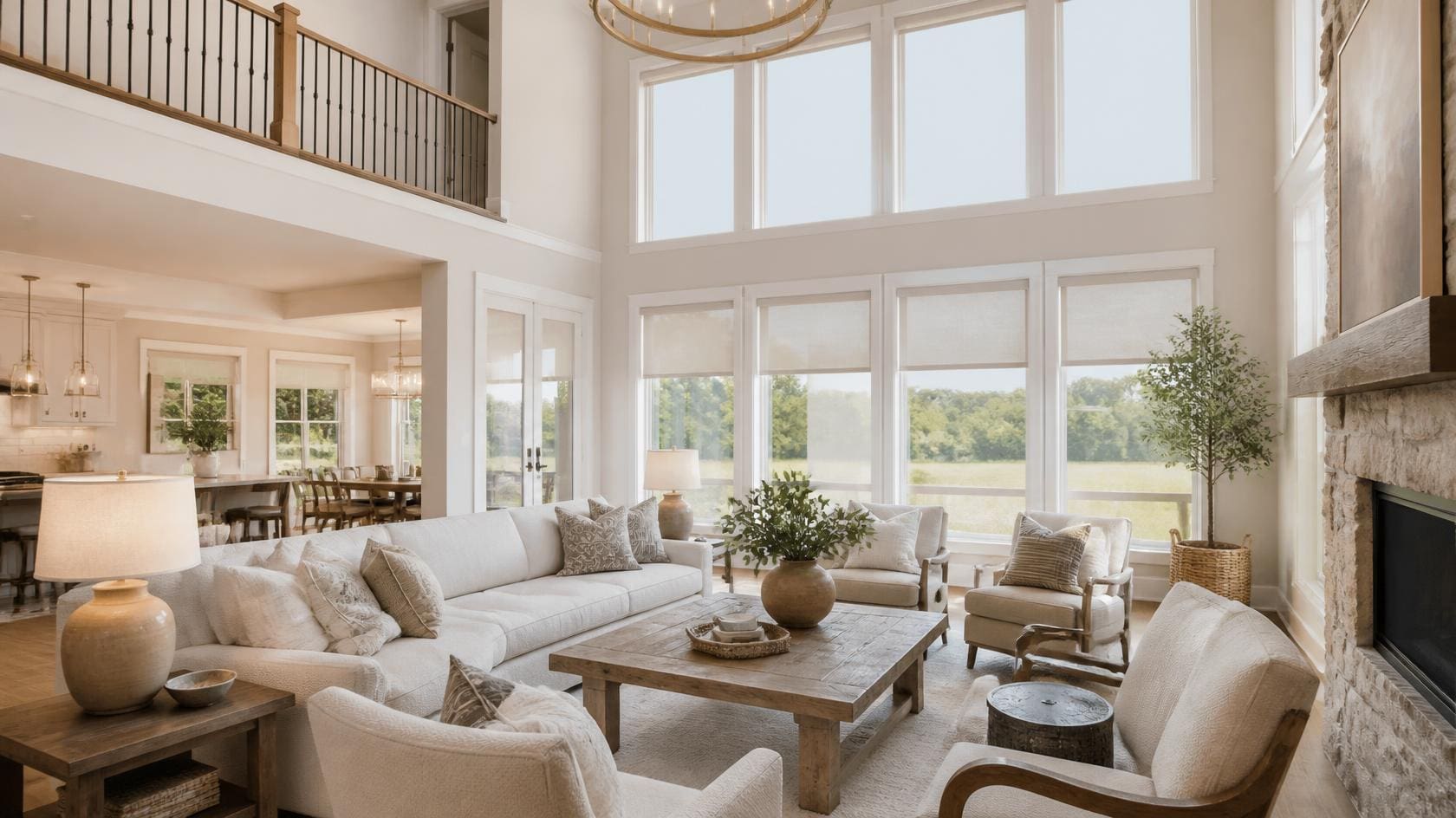
New construction homes in this market tend to share a layout: open-concept great rooms, tall windows, and at least a few spots that are genuinely hard to reach — above a stairwell, behind a kitchen island, or flanking a fireplace. These are the windows where motorization earns its cost:
- Great room and two-story windows — often physically impossible to reach with a wand or cord.
- Windows behind furniture — a sectional in front of a picture window makes manual operation a daily annoyance.
- Bedrooms with smart home routines — shades that open with a sunrise routine or close with a bedtime scene.
- Homes with young kids or pets — motorized and cordless options remove a safety hazard entirely.
Where Manual Still Makes Sense
Motorizing every window in the house is rarely the right call, even for buyers who can afford it. Secondary bedrooms, home offices, and guest rooms are usually easy to reach and used less often — manual shades do the job well there, and the savings can go toward motorizing the handful of windows that actually need it.
Smart Home Integration & Pre-Wiring
This is the detail most new-construction buyers miss: motorizing a window is far cheaper and cleaner during the build than after move-in. If low-voltage wiring is already planned for a smart home system, adding power runs for hardwired shades at the same time avoids the cost and mess of retrofitting later. If you’re still in the framing or drywall phase, this is the window (no pun intended) to make that call — schedule a consultation before trim goes in.
Bottom Line
Motorized shades for new construction aren’t an all-or-nothing decision. The strongest return is on the two-story, hard-to-reach, and high-use windows where manual operation is genuinely a daily hassle — not on every window in the house. Walk your floor plan, flag the three or four windows that would actually bother you to operate by hand, and start there.
Not sure which windows are worth motorizing in your new build? We’ll walk the floor plan with you and give you a straight answer — no upsell, just what makes sense for your layout. Schedule a free consultation.

View comments
+ Leave a comment