
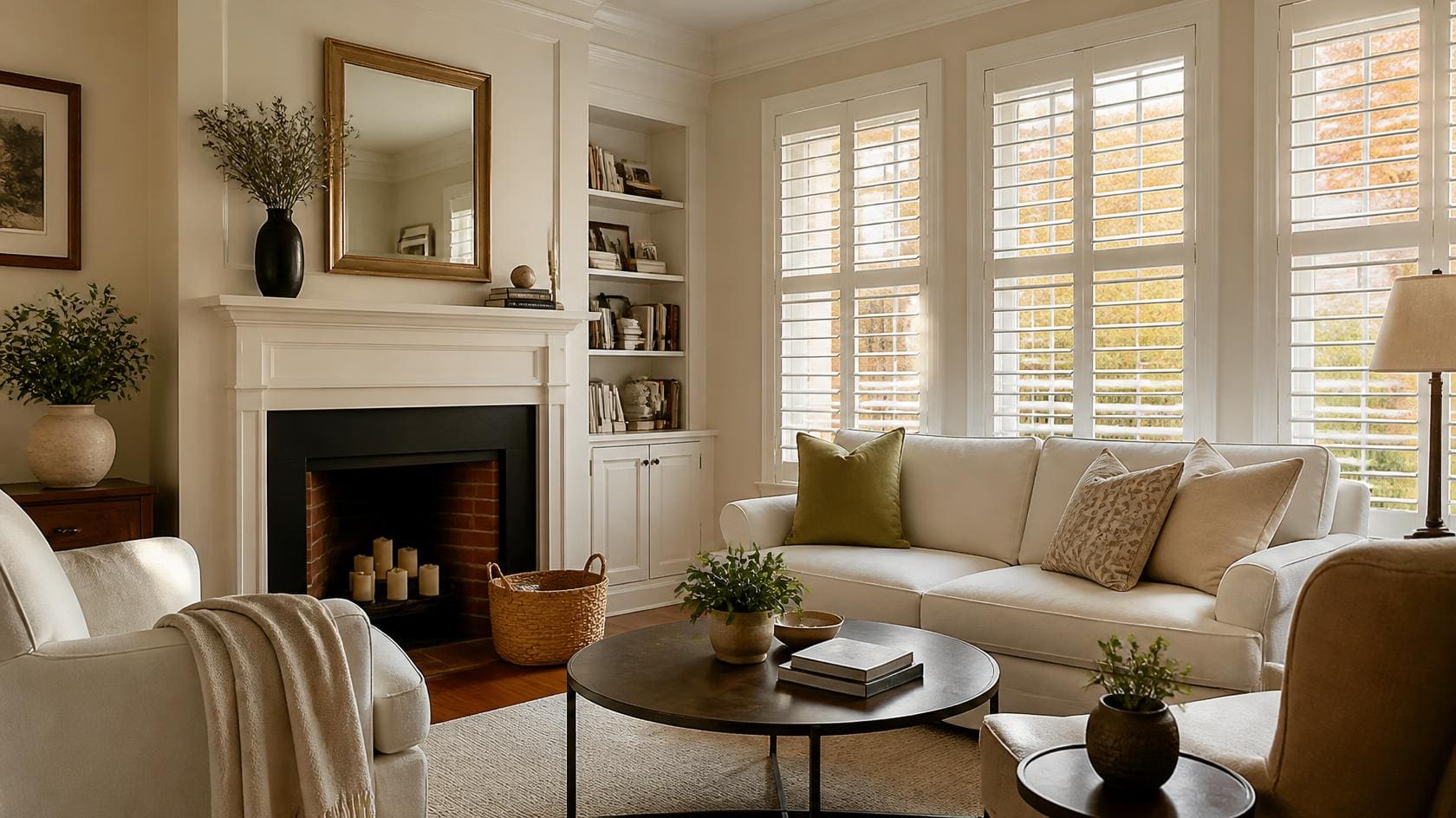
If you own a brick Tudor in Zionsville, a 1940s cape in Greenfield, or an established two-story in Carmel, plantation shutters for older homes deserve a serious look. Older windows are often tall, narrow, deep-set, or oddly sized, and that is exactly where a custom-fit shutter looks better than an off-the-shelf blind.
This guide covers why shutters suit traditional architecture, what they typically cost, and the decisions that matter most before you order.
Why Plantation Shutters Suit Older Homes
Older homes rarely have perfectly square, standard-sized windows. Settling, plaster walls, deep sills, and original trim all mean no two openings are quite alike. Shutters are built to the exact measurements of each window, so they sit cleanly in the frame and look intentional rather than forced.
They also match the look of the era. Wood and wood-look shutters echo the millwork, paneled doors, and trim common in traditional homes, so the windows feel original to the house instead of updated around it.
Light Control, Privacy, and Comfort
Adjustable louvers let you tilt for privacy while still letting daylight in, which matters in neighborhoods where homes sit close to the street or to each other. Closed, they block most light for bedrooms. Because they are a solid panel mounted at the window, they also help cut drafts and sun heat, a useful bonus in older homes with original windows.
What Plantation Shutters for Older Homes Cost
Pricing depends on material, window size, and the number of panels. A cost guide from Bob Vila, drawing on Angi and HomeAdvisor data, puts a typical project in the low-to-mid thousands, with a national average a little under $3,000. Your total depends on how many windows you are covering.
Three things move the price most:
- Material: Solid hardwood costs more than composite or faux wood, which handles humidity better in kitchens and baths.
- Window size and shape: Large picture windows, arches, and unusual openings need more panels or custom work.
- Mounting style: Deep sills allow an inside mount, while shallow or uneven frames may need an outside mount with added trim.
Because older windows vary so much, a firm quote only comes after an in-home measurement. Treat any online per-window number as a starting point.
How to Choose Shutters for a Traditional Home
Start with louver size. Wider louvers give a clean modern look and better views, while narrower louvers feel more historic. Next, pick a finish that complements your trim, with white and soft neutrals being the most common. Finally, decide where shutters make the most sense. Many homeowners start with street-facing rooms and bedrooms, then add other windows later.
If your home is in a neighborhood with design guidelines or an HOA, confirm the rules on window coverings before you order. Interior shutters usually raise fewer questions than exterior changes, but it is worth a quick check.
Plan Your Plantation Shutters Project
The best results come from measuring each window individually and choosing materials that fit the room. Our team serves Zionsville, Carmel, Fishers, Westfield, Noblesville, and Greenfield, and you can browse examples in our portfolio before you decide.
Thinking about shutters for your older home? We’ll measure every window and give you straightforward options for your budget. Schedule a free consultation.

View comments
+ Leave a comment